 Hong Zhong's Blog
Structural - Observer Pattern
Contents
Design Thoughts
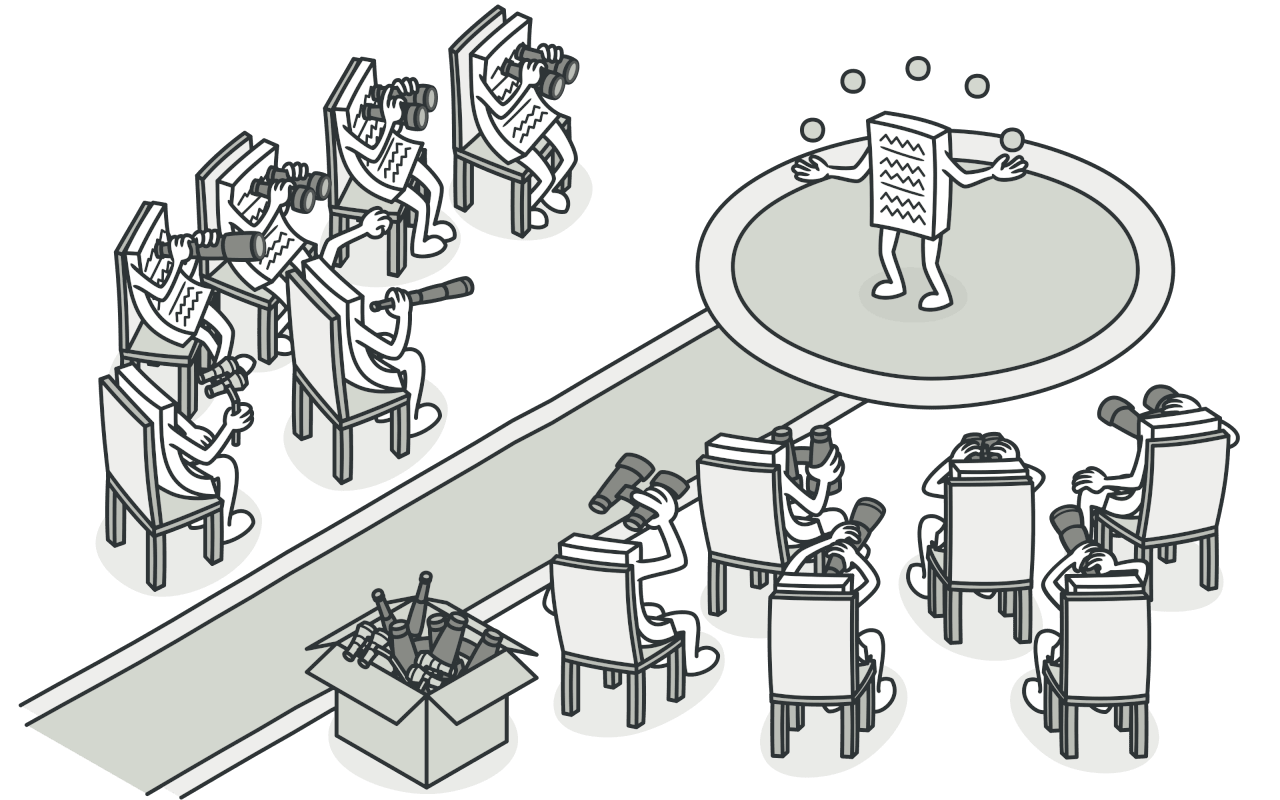
The Observer pattern is a behavioral design pattern that allows you to define a subscription mechanism that notifies multiple other objects that “observe” the object when an event occurs.
The key idea of the Observer pattern is to define a one-to-many dependency between objects. When an object changes state, all its dependencies will be notified and automatically update their states.
Class Diagram
Code Implementation
interface Subscriber {
  void update(String context);
}

class Publisher {
  private List<Subscriber> subscribers = new ArrayList<>();

  private String mainState;

  public void subscribe(Subscriber subscriber) {
    this.subscribers.add(subscriber);
  }

  public void unsubscribe(Subscriber subscriber) {
    this.subscribers.remove(subscriber);
  }

  public void notifySubscribers() {
    for (Subscriber item : this.subscribers) {
      item.update(this.mainState);
    }
  }

  public void mainBusinessLogic(String newState) {
    this.mainState = newState;
    notifySubscribers();
  }
}

class ConcreteSubscriberA implements Subscriber {
  @Override
  void update(String context) {
    System.out.println("ConcreteSubscriberA update invoke. context ==> " + context);
  }
}

class ConcreteSubscriberB implements Subscriber {
  @Override
  void update(String context) {
    System.out.println("ConcreteSubscriberB update invoke. context ==> " + context);
  }
}

public class Client {
  public static void main(String[] args) {
    Publisher publisher = new Publisher();
    publisher.subscribe(new ConcreteSubscriberA());
    publisher.subscribe(new ConcreteSubscriberB());
    publisher.mainBusinessLogic("business");
  }
}
Pros and Cons
Advantages:
- In line with the open-closed principle, you can introduce new subscriber classes without modifying the publisher code, which is easy to expand.
- The relationship between the observer and the observed is abstract, which reduces the dependency between classes and improves the flexibility and maintainability of the code.
- Changes to an observed object can notify multiple observers to achieve broadcast communication.
Disadvantages:
- If there are too many observers, the notification process may take time and reduce system performance.
- If there is a circular dependency between the observer and the observed, it may lead to an infinite loop call and cause the system to crash.
Applicable Scenarios
- The observer pattern can be used when a change in the state of an object requires changes to other objects, or when the actual object is unknown in advance or changes dynamically.
- The observer pattern can be used when some objects in the application must observe other objects.